Combined Sustainable Energy/Health Fair Sparks Interest, Generates Action

There was lots of good ENERGY and information at the Sustainable Energy/Health Fair in Palomas last Saturday. Some energy came from the sun. But most of it definitely came from the kids who helped make the sustainable energy displays. Working with teams at their schools, the Palomas students prepared demonstrations about several different topics related to climate change. All the topics were ones that Border Partners is currently using in Palomas. The students set their exhibits up at Palomas’s Central Park alongside our health displays.

Student Achievement on Display

High school students’ achievements were on display at the Energy/Health Fair in downtown Palomas.

These students, from the College Preparatory High School, made demonstrations about

  • how the air in the global atmosphere is heating up,
  • the water filter BP developed,
  • how to make compost to enrich garden soil and
  • how to make highly insulating building blocks using recycled paper.

The blender bike creates a smoothie without needing electricity.

The suspended, blue, covered pot (left, center) contains broccoli that the students explained was being slowly cooked by the sun’s rays.

One unique exhibit that covered both the topics of the combined Energy/Health Fair was a special stationary bike. A blender retrofit onto this custom bicycle model. Thus, as someone pedaled, they could make a healthy fruit smoothie at the same time–without using electricity. The blender was pedal-powered by the cyclist.

Other students, who attend the Technical High School, explained how solar cookers can cook food without gas or electricity and
the advantages of using a dry toilet (Hint: It saves water).

These students were also challenging people attending the fair to check their heart rates before and after riding an exercise bike.

Peter Edmunds, from Border Partners, worked with the students and their School Principals to organize all the demonstrations in the Energy Fair.

The Energy Fair coincided with the semi-annual Health Fair organized by the Border Partners’ Promotoras.

Health Fair Traditions Continue

Palomas resident clutches her bag of “take home” greens from the greenhouse.

Veggies and garden seeds were free to take home. Donations were welcome.

For the HEALTH FAIR, the Promotoras offered free healthy burritos featuring fresh vegetables from the BP gardens with beans and cheese. There were also bags of mixed greens to take home and also seeds to take along and plant.

In addition, the Health/Energy Fair provided free haircuts and flu shots for attendees.


Slide Show of photos from the Energy/Health Fair on Flickr: Sustainable Energy And Health Fair 10/22

Education Center Officially Reopens in Palomas

Israel Lozano Magdaleno, the Principal of the Ford Primary School, explored one of the drawing programs that the new computers offer.

There was excitement in the air at the Border Partners’ Education Center Grand Re-Opening on October 8. And there was very good reason to be excited! Not only was the Education Center re-opening officially after being closed because of COVID for more than two years, there were 20 brand new computers, with internet, ready for people from the community to use.

The new computers were a gift from the Diaz family and their business, New Mexico Chile Products. The donation honors their brother, Eddy, who died recently. Art Holguin said this about his brother-in-law: “Eddie was a religious, caring individual who put God and faith first in his life. He did not care for titles, awards or special recognition and, as I am writing this, he’s telling me to stop talking about him and explain why this computer lab is so important.”

Juan Lares, the Director of the Education Center, spoke about the wide range of opportunities that await the visitor to the Center. Students will be able to do research for school projects. Others will be able to access online, post-secondary classes from schools not located in Palomas. People without the internet in their homes will be able to communicate with friends outside the village. Some will take classes that will be offered on a variety of topics ranging from introductory to more advanced levels.

The Mayor of the Village of Palomas, Josè Adame Sanchez, and many representatives from local schools and the public library attended the event. They were eager to learn about the opportunities that the Center will offer their students.

Presidente seccional Josè Adame Sanchez, Palomas mayor, and Gloria Alicia Aguilar Banda  paused for our camera during their visit to the re-opening of the Education Center.

We are so very grateful to the Diaz family for their generous donation. These computers will offer high quality learning experiences for Palomas children and adults for many years to come.

Israel Lozano Magdaleno, the Principal of the Ford Primary School, was interested in one of the drawing programs that the new computers include.

Enjoy other images from the day in this slideshow (photo credit: Polly Edmunds). Click through to Flickr to see names and captions.

ed center opening Oct 2022

Something for Everyone: Programming spans many needs

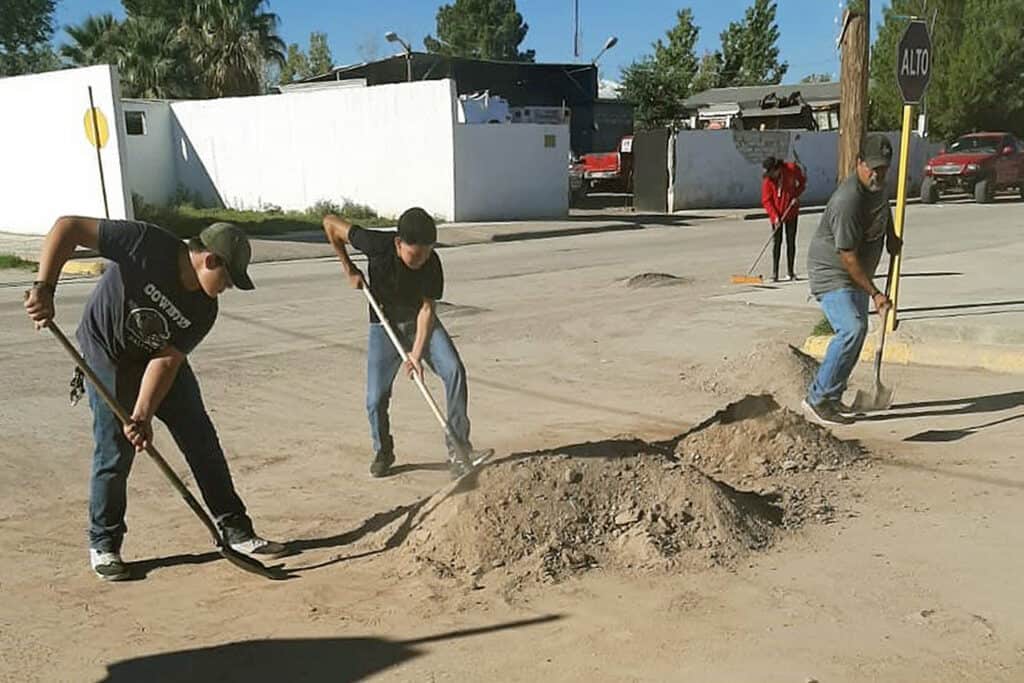
The people of Palomas dig right into many ways to improve life in their community with your support. Here are teens cleaning the area around the Education Center, allowing access for cars to the site.

Four workshops on four important topics for four different age groups: Border Partners’ staff managed a busy September schedule in Palomas.

  • Some of the elders who attended the recent workshop on senior health issues.

    Sixth Graders (18) at the Ford School focused on how to build strong self-esteem.

  • High School Students (15) learned about Sexually Transmitted Diseases and–most importantly–how to prevent them.
  • Pregnant Women (8) discussed the importance of good nutrition during pregnancy. The health of Palomas’ future children will improve with this preparation for births.
  • Seniors (8) talked with each other about difficulties with insomnia and learned some ways to deal with it.

Everyday Tasks Continue

In addition to the special workshops, all our normal work continues. The gardeners distributed loads of veggies. Chard, celery and cilantro produced abundantly.

The Promotoras conducted 98 glucose tests for people in danger of having diabetes. They also administered 22 COVID tests. And, they prepared and delivered 698 meals to isolated seniors.

Sports events continued, too:

  • Every month, the BP Bike Event attracts more riders.
  • Our daily, morning Zumba class consistently attracts 8-12 women.
  • This summer’s youth soccer season concluded with a Championship Tournament. Four teams participated and 100 people came to watch the exciting games.

And besides all that, staff and 10 volunteer students from the Prepa High School cleaned and repainted the Education Center in preparation for the Grand Re-Opening which will take place on Saturday, October 4 at 4 p.m.

Regular attendees of Zumba classes celebrate birthdays of the group. They form community with each other.

Upcoming Special Event

We invite you to the Health Fair and Sustainable Energy Expo in Palomas on Saturday, October 29 from 9am-3pm.

Enjoy delicious, healthy burritos! Take advantage of immediate health checks! Receive a haircut! Border Partners will offer all these services at no cost to attendees.
In addition, view low cost, sustainable energy innovations, including:

  • solar cookers,
  • a pedal powered blender
  • a solar water heater
  • a bio-char stove
  • papercrete building blocks, and
  • a waterless toilet.

We’ve put all of this technology to work in Palomas. Come and see these sustainable energy techniques and technology in action. Expect to see even more and enjoy more opportunities at the Health Fair and Sustainable Energy Expo.

Biochar: An ancient idea with new possibilities

Peter Edmunds & Bill Knauss

Bill Knauss (right) discusses concern regarding climate change and the hopeful impact of biochar on the planet with Peter Edmunds, co-founder of Border Partners. (file photo)

by Peter Edmunds

For thousands of years, farmers have known that charcoal improved their crop’s productivity. Now people across the globe are discovering that this same product — renamed “biochar” — may hold answers to our climate crisis.

Since 2014, Border Partners (BP) has manufactured biochar from pecan shells. We use special stoves for this process that also provide heat for chilly Palomas homes in the winter months. Our gardens benefit from biochar as a soil amendment. Biochar improves the soil’s ability to absorb and retain both water and nutrients from compost and from fertilizer.

Biochar in Palomas

Our special biochar stoves, designed by Bill Knauss and built by Adrian Acuna–two border locals, will heat 13 family homes in Palomas. Residents of homes with biochar stoves don’t need to purchase propane or wood as a fuel source. Pecan shells heat their homes economically, improving the homeowners’ financial situation. These shells are a plentiful local byproduct from the area’s pecan orchards.

Border Partners loans the biochar stoves to homeowners who agree to use them according to our instructions. The homeowners also agree to work two hours per week helping BP staff with stove maintenance work. These tasks include:

  • unloading and storing the pecan shells arriving from area orchards,
  • delivering pecan shells to homes that have stoves,
  • picking up the biochar product from the homes at the end of the burn process,
  • delivering the biochar to our compost site at the stockyards, and
  • preparing the biochar/manure compost piles.

Biochar’s Positive Impact

The stoves improve their home environments by acting as furnaces. They help family finances by eliminating the need to purchase fuel. In addition, the positive impact of these stoves on our changing climate is significant for both climate improvement and crop production.

Carbon dioxide warms the planet, creating climate change. What’s that got to do with biochar? It makes a direct impact. Each of our stoves produces about one ton of biochar per heating season. That ton of biochar, when added to the soil, absorbs and permanently secures the equivalent of four tons of carbon dioxide into the earth. With 13 operational stoves, Border Partners can remove and sequester 52 tons of carbon dioxide every year.

Our biochar, an unassuming looking product, has an impressive global impact when it’s used as a soil amendment.

The increased production in our gardens as a result of adding biochar is also measurable. It varies between 25 and 35% improvement in production. This is not only a magnificent increase in annual crop production. It also creates significant change because it’s a permanent soil improvement.

Border Partners gardens and greenhouses can use about three tons of biochar per year. Some of the biochar we produce will go to the university in Juarez to extend their research. We’ll give the remainder to local farmers to permanently improve the productivity of their fields.

Eventually, we’ll sell our “carbon credits” on one of the carbon exchange markets. With the income from that sale, we can purchase and install more special biochar stoves in Palomas.

The biochar stove project makes a significant impact on the growing capacity of the local farms and gardens. It helps families warm their homes at low cost and without using non-renewable resources. In addition, Border Partners is doing its part to mitigate the effects of climate change on the planet. We’re working to improve lives on a global level by helping locally in Palomas.

Progress in Palomas: Three Important Areas

We think these teen volunteers are pretty cool for all the hours they contributed to improve their community.

Summer heat didn’t slow our work. Border Partners moved forward in three important ways recently: the Promotora action, ongoing and special summer activities, and a new teen program.

Building Promotora Team

Finding qualified personnel is critical to accomplishing good work. This can be more difficult in rural areas like Palomas. So, we were excited to welcome a new promotora to the team. Carla Chavez, who has training as a nurse, joined our Promotora group and is learning how to perform their multiple tasks.

Promotoras’ August Checklist

And, just last month, these Promotoras accomplished so much. They:

  • checked blood pressure and glucose for 78 people and administered tests for COVID to 15 others at their office,
  • prepared and delivered 175 hot Meals on Wheels for 26 isolated seniors,
  • conducted 23 Zumba classes,
  • organized and presented a five day “Summer School” for 48 children with classes focused on health, nutrition and physical activities. One of these classes, for instance, taught the children how to manage their strong emotions.

Ongoing Projects and Some New Ones

Meanwhile, we kept working in our typical routine and added other special summer events to enrich lives in Palomas:

  • Garden staff tended the community greenhouses – harvesting and distributing impressive quantities of zucchini, chard, celery and spinach. This produce fed kids at lunches during the summer school. And, homebound senior citizens feasted on fresh, healthy veggies in meals the Promotoras delivered to them.
  • We organized weekly summer soccer family tournaments. Typically around 38 children and 40 adults participate on Saturday and Sunday evenings from 5-8 p.m.
  • We also sponsored and conducted a community bike ride for 28 children and 18 adults.
  • To promote learning, we opened the Education Center each weekday afternoon. During August, 37 children came to use the internet there for their chool work and other learning projects.

Border Partners’ Teen Volunteers

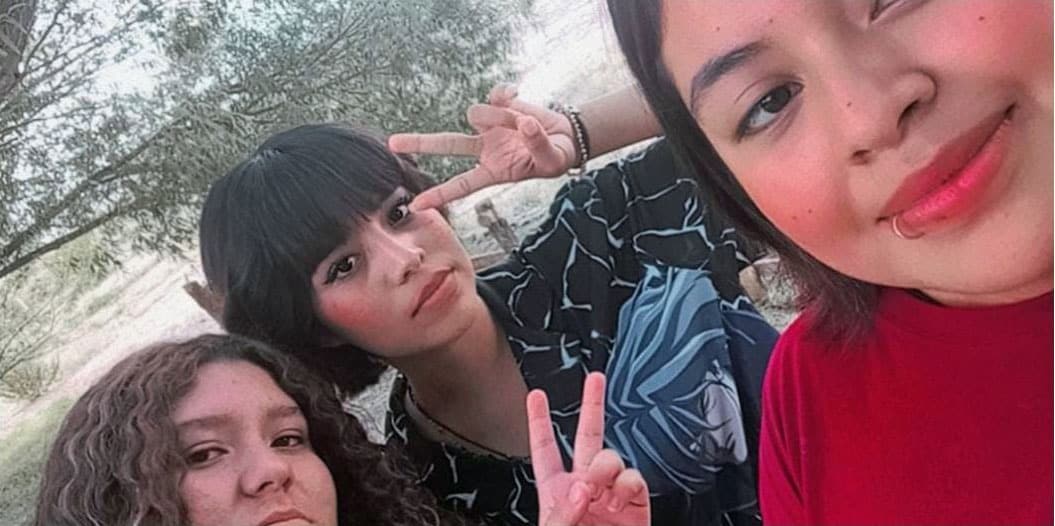
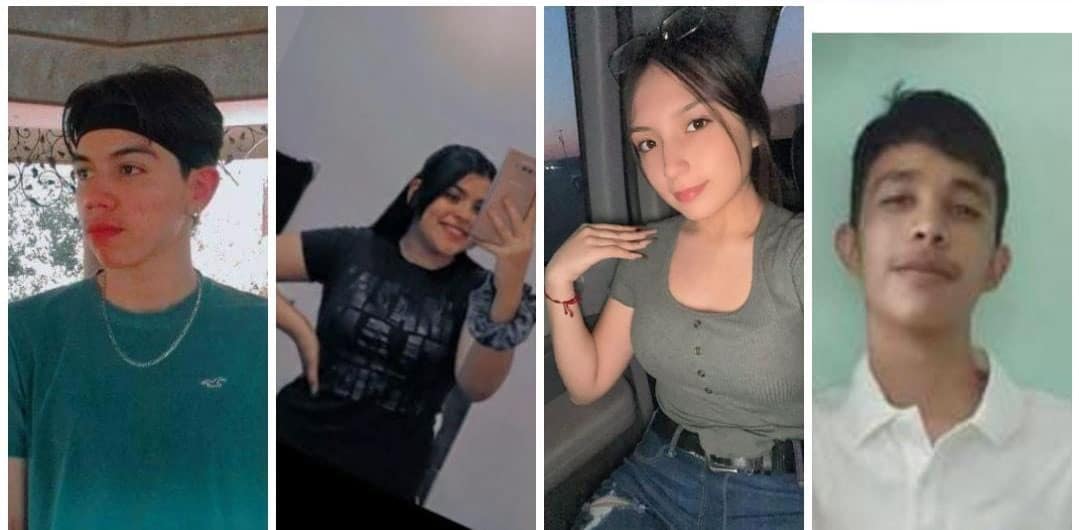
Teen volunteers helped with the summer school and Meals on Wheels, contributing 86 hours this month. This post features photos of volunteers Cassandra Maldonado, Arely Corona, Giovani Lovato, Brandon Chavez, Jennifer Ibarra, Ruben Bailon, and Jaqueline Gonzales Vanessa Leyva.


For the first time, Border Partners welcomed eight student volunteers who together contributed 86 hours to help with Summer School and preparing Meals on Wheels for seniors. We’re so grateful for their help. And, we’re pleased to provide them mentoring and work experience that they can build on going forward.

We’re proud of all these accomplishments and are happy to anticipate new things happening soon. We’re always aware that so many help us make a better life possible in Palomas.

Palomas children learned and grew during August summer activity week

A week of summer enrichment activities engaged 47 students in Palomas this month.

This month, 47 children enjoyed an engaging week of summer activities in Palomas. They learned new skills, got some healthy exercise and ate a nutritious meal each day. This week-long summer highlight resulted from the ingenuity of our staff and the generosity of the Gila Friends Community and the Paso del Norte Health Foundation.

Each day, the children participated in seven classes. These enriching topics included mental health, nature, computer, first aid, arts and crafts, nutrition and sports.

Our staff produced three classes as brand new offerings: 

  • In the mental health class, Cecy, the instructor, focused on having children learn to recognize their emotions and practice some simple ways to release negative ones.
  • The nature class focused on learning about how plants grow and how different vegetables benefit the human body.
  • In the computer class, children actually opened up a computer, broke it apart, and put it back together again. As a result, they could understand better how a computer works.

The morning of learning ended with a nutritious lunch for the children.  As an example, one of the lunches was empanadas made from soy granules and vegetables from Border Partners’ garden along with a drink made from fresh fruit.

As children prepare to resume a school year, many are concerned about losses in learning due to COVID disruptions in the past two school years. These disruptions have been particularly difficult for impoverished families who lack the technology and resources to supplement the children’s education. A week of enriching instruction and structured activities will boost the students’ school readiness and help them begin a school year well. We’re grateful to all our supporters for providing this important opportunity for the children. 


Many Palomas lives improved last month–in multiple ways.

We’re improving lives in Palomas. No life is too small to overlook.

YES, it was another busy month in Palomas. Here’s what happened:

During July 2022, the Border Partners Promotoras

  • checked  blood pressure and glucose for 154 people who came to their office and for 11 adults in the Central Park,
  • arranged for a presentation to nine pregnant women about fetal development,
  • administered 75 COVID tests,
  • prepared and delivered 534 hot meals to 26 isolated seniors,
  • conducted 22 Zumba classes and
  • distributed food baskets to 20 needy families in each of three nearby communities (total 60 baskets),
  • organized and presented an art class to seven isolated seniors

All the staff organized another bike ride in July. Two people repaired eight bikes so the kids could ride along with the others. In all, 25 children and 8 adults participated.

Border Partners–and especially our staff–were recognized by two local schools: the Secundaria and the Ramon Espinoza Elementary School–for the exceptional support they provide.

What’s coming up?  

The Promotoras will be presenting our annual summer school during the first week of August. School starts again for the kids in Palomas about the middle of the month.  

In September, some new and notable activities: 

  • There will be an Open House at the Education Center to show off our new computer equipment which was purchased to honor the memory of Eddie Diaz from Deming. 
  • Peter Edmunds and Mike McCain will be working with students from the Middle School to make blocks to build houses out of recycled cardboard salvaged from the landfill. These blocks have exceptional insulating ability – much better than cement blocks which is the predominant material used in Palomas. The cardboard they’ll get from the landfill would normally be burned.  More on this later…

The border situation in our area: News from Desert Exposure

Our journalist friend Morgan Smith again researched this area of the border to learn about the migrant shelters’ situations. His findings are posted online at Desert Exposure’ website. Learn about our friend Ariana Saludares and the Colores United group in Deming. See the migrant shelter that Palomas operates.

Migrant Shelters on the Border
Taking a look at the human truth

It’s Thursday, April 28, and we’re at a migrant shelter in Deming (pop. 23,000), the first of three shelters we’ll visit today and tomorrow. What happens if Title 42 is lifted or if the Supreme Court allows President Biden to do away with the Remain in Mexico program initiated by President Trump? What will this do to the numbers of migrants coming to our border seeking asylum and what role will these shelters play?

The shelters we will visit on this trip – Deming; La Tierra de Oro in Palomas, Mexico just across the border from Columbus; and Respettrans across the international bridge in Juárez; plus La Casa del Migrante in Juárez; and Annunciation House in El Paso that I have visited before – these five contain part of the answer to this migration issue. They are largely volunteer-run, cost far less per migrant than the private shelters our government contracts with, and offer a level of humanity that doesn’t exist in the government-contracted facilities. In short, they are models for how to treat migrants.

Is that enough?        

We meet Ariana Saludares, the president and co-founder of Colores United, at a motel in Deming where she and several volunteers are putting together food packets for children. The majority of migrants staying there are women with small children; getting the proper nutrition to these children is critical. These migrants have all passed their “credible fear” test, are in the United States legally, and are awaiting transportation to family members or sponsors in the country.

Ariana is doing what she and other Deming volunteers did before Remain in Mexico went into effect in early 2019 – provide medical screening, housing and food and then organize transportation so that the migrants can travel to their family members or sponsors here. They are experts.

Arana’s goal is a stand-alone Colores United shelter but raising money for that is a challenge, especially given the confused signals from our government officials.

The next stop is the
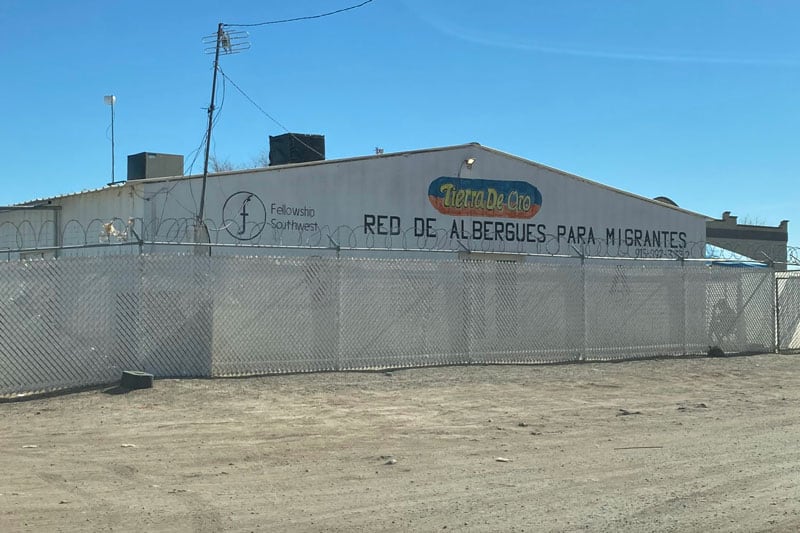
La Tierra de Oro migrant shelter in Palomas. “Network of Shelters for Migrants”

(pop. 4,700), about 30 miles south of Deming and across the border from tiny Columbus. This is one of several shelters run by Padre Rosalio Sosa, head of the Iglesia Bautista Tierra de Oro in El Paso. Much of the support here comes from volunteers in Deming and Silver City. A key person is Sandra Magallanes who is a high energy genius at sorting out the problems of migrants.

Martín Garcia López, the manager, fled Michoacán with his wife 10 months ago. Cartel members ordered him to join them and when he refused, they put a bag over his head and beat him. “Ayudar o morir,” they told him “Help us or die.”

Why is his case taking so long?

We also met a young Russian woman there. Elena had taken an extended route through Istanbul, Amsterdam and Mexico City and hopes to get to Tucson. She calls Sandra Magallanes an “angel” and says she has never been around a kinder group of people.

The Friday morning visit begins in El Paso at the garage of professor Eva Moya, a faculty member at the University of Texas at El Paso. She is a vital part of a “supply chain” that begins in Placitas at the home of Cheryl and Jack Ferrell, the founders of a non-profit called Dignity Mission. About once a month, the Ferrells and their group of local volunteers take a huge load of food and clothing to El Paso and unload it in Moya’s garage. Moya and her volunteers then ferry these items – carload by carload – across the border to shelters in Juárez, mainly Respettrans and La Casa del Migrante.

Whenever I go, I take a load of items donated by friends here in Santa Fe and later a second load from Moya’s garage.

These loads consist of food, bathroom items like toilet paper, toothbrushes and toothpaste, clothing and shoes, bedding. In short, whatever Grecia Herrera, the director indicates she needs. She’s a nurse and works in a local hospital so the migrants – mostly women with small children – actually run the shelter which can house 200 or more per night.

While we were there we met a woman from El Salvador named Johanna Melendez who left her country last August with her two children, aged 13 and 6. They spent six months in a shelter in Chiapas, Mexico, finally got to Juárez and Respettrans two and a half weeks ago. Because she studied some English in school in El Salvador, she has started a language class for the kids in Respettrans. These kids have to know some English, she says. This is just one example of how the migrants themselves are reaching out to help others.

These shelters are models for decent and humane care and treatment and lower costs operations. However, these three, plus Annunciation House and La Casa del Migrante and the other volunteer or non-profit or church-related shelters, won’t be enough to handle the influx of migrants.

A couple of obvious suggestions. Speed up the process. First, when you have a woman with small children who, like Johanna Melendez has spent roughly 10 months traveling north you have to believe that she meets the “credible fear” test. Therefore, cases like this should be resolved quickly and easily.

Second, why not help these shelters expand? Provide some funding for people like Ariana Saludares at Colores United so that she can build the stand-alone shelter she has been dreaming about.

Third, have these highly dedicated and skilled volunteers function in some advisory or monitoring role in the larger government-sponsored shelters. They know the meaning of decent care.

Fourth, if either or both Title 42 or the Remain in Mexico remain in place, create a Mexico-U.S. taskforce to support the shelters on the Mexican side.

Given the corruption, violence, poverty and now climate change in countries like those in Central America as well as a new influx of migrants from Ukraine, the number of migrants seeking to enter the United States isn’t going to slow down. Therefore, let’s find ways to head off the political rhetoric and focus on making this a more humane process.

Morgan Smith has been writing about border issues for the last decade and can be reached at Morgan-smith@comcast.net

Our summer activity improves life: building, growing, assisting, teaching

Summer heat hasn’t slowed our activity to improve the quality of life in Palomas. Intensive activity continues to makes changes in many departments recently. 

Garden program growth

The Border Partner gardening staff

  • built a second greenhouse at the Ramon Espinoza Elementary School and
  • planted an outdoor summer garden between the community greenhouses.

In addition, they tended to their regular duties of weeding, planting, watering and picking veggies. These nutrient-rich crops feed food insecure residents of the border.

Promotoras promoting health

  • weighed and measured the 115 children who attend Ford Elementary School,
  • distributed donated eyeglasses,
  • attended a workshop to learn how to teach women habits that promote a healthy pregnancy,
  • delivered 25 personal hygiene baskets to older fathers in the community,
  • presented a class on nutrition to 23 fourth grade students at the Ramon Espinoza Elementary School,
  • checked blood pressure and glucose levels of 34 adults,
  • arranged for a presentation to ten new mothers about the importance of breastfeeding babies,
  • administered 19 COVID tests,
  • prepared and delivered 704 hot meals to isolated seniors,
  • conducted 22 Zumba classes and
  • repaired six bicycles in preparation for their monthly community Bike Ride which was attended by 38 children and 6 adults.

Augmenting Education

The Education Center received 84 visits in the last month. The majority of users are children ages 9-15. 

WHAT’S COMING UP?

During the first week of August, the Promotoras will once again organize our ANNUAL SUMMER SCHOOL for elementary kids. This event which we began in 2012 did not happen during COVID. We are so happy to once again be able to offer the kids in the community fun activities and a healthy lunch during their vacation from school.  This enrichment is vitally important this year to children whose lives and educations were seriously interrupted by the pandemic. 

First-ever: Border Partners Trivia Quiz

We’re stretching our creative muscles to make you think:
Test your knowledge of Border Partners work. The correct answers are found at the end of this post. (No fair peeking.) How well can you score on some BP basic info? Try it yourself and see.

1. Which of the following is NOT one of Border Partners’ primary activities?
a. Gardening
b. Distributing used clothing
c. Teaching nutrition classes
d. Making and delivering meals to isolated seniors
e Organizing sports activities
f. Offering computer classes for children and adults

2. In what year did Border Partners begin working with people in Palomas.
a. 2005
b. 2008
c. 2011
d. 2017

3. The name of the Mexican State where Palomas is located.
a. Morelos
b. Chiapas
c. Chihuahua
d. Sonora
e. Nyarit

4. A generous donation from the Diaz family from Deming will enable us to replace what important equipment?
a. The computers in our Education Center
b. The truck used for gardening projects
c. Our kitchen stove
d. The van used for delivering meals to seniors

5. What are some of the benefits of the Biochar we use in our gardens?
a. It sequesters carbon in the soil.
b. It makes the soil more able to retain moisture.
c. It permanently improves the soil.
d. All of the above.

6. How many community greenhouses does Border Partners currently operate?
a. One
b. Two
c. Three
d. Four
e. Five

7. Which is NOT one of the activities of our group of Promotoras?
a. Checking blood pressure
b. Teaching zumba classes
c. Preparing meals every weekday for twenty isolated seniors
d. Teaching healthy sexuality to teens
e. Giving COVID tests
f. Weeding our gardens
g. Distributing food to needy families
h. Checking blood glucose levels
i. Teaching nutrition classes

8. What do our supporters/Partners do for the people of Palomas?
a. CHANGE LIVES!
b. CREATE OPPORTUNITIES!
c. OFFER HOPE!
d. All of the above.

Answers: 1:b 2:b 3:c 4:a 5:d 6:c 7:f 8:d

Congratulations for completing the quiz! If you got 8 right, you are a FULL FLEDGED PARTNER. If you got any of them right, we appreciate your interest in our work! YOU are a supporter simply by reading our website or our e-newsletter. Your time and attention help us continue to do our best to create new options where there are few options.